

learning a new language is easy, actually
While some languages take as little as 600 hours to reach fluency, you can also just watch videos about how to learn the language for 1000 hours. Should achieve the same effect, honestly.
Discover science-backed strategies for mastering a new language through cutting-edge research and expert insights. This comprehensive guide explores cognitive science principles and practical techniques to help you understand the most effective methods for language acquisition.
Thu Nov 13 2025 - Written by: TheLingOtter
So you probably encountered some YouTube gurus claiming that you can learn a language in a month if you just followed their advice and bought some language learning lessons that they have created. Well first of all, you can’t really learn a whole new language in a month. Even the most diligent of learners will not be able to attain fluency in such a short amount of time.
Often than not, these YouTubers are just click baiting and attempting to sell you something, which is why I wanted to talk about these “best methods” of language learning. As a person who has gotten a degree in linguistics, I was a bit tired of seeing all these scams popping up in my recommendation feed.
I’ll be going over all the most important second language acquisition theories that have been proposed by esteemed linguists. The linguists that I’ll be mentioning in this article have dedicated their whole lives to researching how second language acquisition works and how to best maximize learning another language. Along with this, I will also include various research studies that support these kinds of theories. After that, I’ll give my own opinion of what I believe is the best way of learning another language based on these theories.
When you think about the main components of learning a second language, you think of speaking, listening, reading and writing. We’ll focus on speaking and listening for now, as these are the core communication skills.
One of the main things that differentiates the theories is how much importance is placed on speaking and listening. In other words, modern day linguists are attempting to figure out whether language input or output is more important for learning a language.
One of the most notable advocates for the output theory is a Canadian applied linguist by the name of Merl Swain. According to Merl Swain, output is one of the most important factors when it comes to progressing in language learning.
The main reason for this is because of something called the “monitor” - not the monitor that is connected to your computer, but a person’s ability to filter out any incorrect language from being uttered.
Why is this monitor so integral to the output theory? Well, according to Swain, the monitor allows a learner to know any gaps in their knowledge of a second language. For example, I may want to tell a Spanish native speaker “if only I had gotten a better grade,” but before saying the phrase in Spanish, your internal monitor may catch that you’re going to utter a sentence that is grammatically incorrect. Therefore you may stop yourself from saying the sentence.
The benefit of this is that your conscious brain has now been made aware that you lack the ability to convey regrets about past actions in the target language. If I had never done any output of the second language, I would have never noticed this gap in my knowledge. But now that I’m aware of it, I’m able to actively research the correct ways of saying my thoughts in the target language.
This isn’t just limited to grammar - it can be as easy as learning new words in the language. While outputting your target language, you may notice that you don’t know a word for a certain thing, so you might ask a native speaker or look it up in the dictionary. By doing this, you have increased your language ability.
Now you might be saying: can we notice these gaps in knowledge simply through input only? In other words, can I just listen to a bunch of media or native speakers and realize what things I don’t know that way? Well, you can, but according to a 2002 study, the students who were made to output more language were able to learn new grammar much quicker than the students who were only given language input.
The study suggests that output allows the students to learn grammar quicker. Of course, this is only a study of 60 students, so take this with a grain of salt. Additionally, this was testing grammar and not other aspects of language like vocabulary.
Why does output seem to be so important for grammar? The main explanation is that when you’re solely receiving language input, you’re mostly focused on understanding the meaning of speech, which means that you aren’t really paying much attention to the structure of language or the grammar. Meanwhile, when you are forced to do language output, your brain has to convert your own thoughts into meaningful sentences that are grammatically correct.
Because of this, it appears that if you want to improve your grammar in a language, the most efficient way is probably to speak the language with a native speaker.
The next theory that you probably have heard about is the input theory. This one is often spouted to be the best method of learning a new language by many online sources. Some even claim to throw traditional learning out the window and solely rely on input.
It all started with a man named Stephen Krashen, who is the most famous proponent of the input theory. According to Stephen Krashen, there are five key principles that are important to know about the input theory:
Acquisition vs. Learning: According to Krashen, there’s a clear distinction between learning and acquisition. Think back on those times you were in a foreign language class and were told to memorize an entire conjugation table. This memorization of rules is what Krashen calls “learning” language. “Acquiring” language on the other hand is a subconscious process - a learner will often not realize that they have acquired new language.
Compare this with learning, which is more of an active and conscious action. According to Krashen, acquiring language is a more efficient way of becoming fluent when compared to learning language, since acquiring builds your ability to generate language spontaneously. Meanwhile, relying on your learned language will require you to slowly construct your sentences through recalling all the rules you learned in class, which takes much longer and is not really how we naturally speak.
Comprehensible Input: According to Krashen, the most ideal form of input you can have as a language learner is input that is slightly above your current level. Ideally, you want to control your input by having it be I + 1, where I is your current language knowledge and +1 is the increase in the level.
What would this actually look like in practice? Well, imagine you’re learning the English language and you encounter a sentence like: “We saw a lot of people dobling into the subway.” You probably understand this entire sentence except for the made-up word “doblɪng.” This is a perfect example of I + 1, or in other words, comprehensible input.
You probably don’t even need a dictionary to understand this new word “doblɪng” since you can use the context to fill in the blanks. You’ll probably assume that “doblɪng” has something to do with hopping onto a vehicle. And just like that, you have learned a new word in the language. This is why Stephen Krashen claims that I + 1 input is the best kind of input because you’ll naturally acquire the new language without the need of a dictionary or textbook.
Monitor Hypothesis: As mentioned before, a monitor is the brain’s ability to filter out any language errors before speaking. According to Krashen, the main role of language learning is simply to build up the monitor. Then the monitor checks your acquired language for correctness before producing speech.
For example, I may have memorized the different conjugations for a verb in Spanish, so before saying a sentence in Spanish, my monitor might stop me from speaking until I make sure that I’m using the correct conjugation. According to Krashen, learned language can be useful for checking mistakes in language, but it greatly impedes communication since you have to stop and think about what you’re going to say.
Because of this, Krashen states that one should only really use their monitor while doing something like writing, where you’re given the time to think about the correctness of a sentence, and not in situations like talking with another speaker, which requires spontaneous speech.
Natural Order: Krashen suggests that the order of language concepts that we learn in the classroom does not align with how humans naturally progress through language.
Affective Filter: If a learner is extremely self-conscious of speaking, then it will hinder their learning. However, if a student feels no embarrassment about their language speaking, they will be in the optimal state of mind to acquire new language.
I’m sure many of you can relate to this one along with me, as I often struggle with being embarrassed about making mistakes in a language. I have to remind myself that it’s okay to say things incorrectly as that’s the natural process of language learning.
There are quite a few criticisms of Krashen’s input theory. One major one is that the existence of a difference between acquisition and learning of a language has not been proven at all. It appears that Krashen has made this distinction without any real evidence to back up this claim.
Another criticism comes from the applied linguist Wolfgang Böttcher, who states that understanding the grammar of a language is necessary for acquiring it. An example given is if a student learned the phrase “what time is it,” then they have only acquired the meaning of the entire phrase. But if they understood the grammar that underlies this phrase, then they would be able to produce new sentences like “what day is it,” “what street is it.” By learning the grammar of a sentence, acquiring one phrase can lead to acquiring many other phrases as well.
So although Krashen claims that learned language is not too important, it seems to really help in situations like these. In fact, a 2023 study gathered around 15,000 students and tested them on their reading comprehension. According to the study, the group of students who had a foundational understanding of grammar had higher reading comprehension rates compared to students who simply just read. Of course, this study was done on reading and not speech, but it could tell us something about the importance of traditional learning in a classroom when it comes to grammar.
Other criticisms come from the proponents of output theory who claim that having an output allows for you to become aware of your gaps in knowledge. Without output, you may not be aware of what areas of language you need to focus on.
So although input theory seems to be spouted as a holy grail language learning method, it does come with a few downsides, the biggest one being the lack of importance placed on output and traditional learning, despite some studies showing that it can be quite beneficial in speeding up your language learning.
So is that it? Is it either input or output? Well, there are a lot of other theories out there, but there’s this last one I really want to talk about since it combines both input and output, and that is interaction theory.
The biggest proponent of this method was a psycholinguist by the name of Michael Long. According to him, the best way of learning a language is through face-to-face communication. If a native speaker is unable to communicate their ideas to you, they will naturally lower the complexity of their speech until it is comprehensible to a language learner.
By doing this, the learner will now be getting constant comprehensible input tailored specifically for them as long as they continue to communicate with that native speaker. On top of this, the learner will be able to output as well. As the output theory suggests, the learner may realize that they’re unable to communicate their idea effectively, so they’ll ask the native speaker for an explanation either on a definition or how to word something correctly.
Overall, interaction theory is suggesting that to get the best comprehensible input and output, you need to be constantly interacting with native speakers who are willing to work with you.
According to Long, the most ideal scenario for the interaction theory is if both the native speaker and the learner are placed in a situation in which communication is needed to achieve similar goals. For example, let’s say you go to a rural farm in Mongolia and work with a family there. In order to achieve the goals of their farm, the family will have to communicate with the learner in their language. To do this, they will simplify their language and maybe use a lot of hand gestures to bridge the gap. Likewise, the learner will be forced to speak Mongolian, even if at a basic level, as to facilitate cooperation.
In this ideal scenario, interaction theory suggests that the learner will learn the language at the most rapid and efficient rate.
Some researchers claim that interaction is not needed to learn a language. This can be seen in cultures that do not speak to their baby until the child has reached a certain point in their language development, such as the Kuli people in Papua New Guinea. If a baby is able to learn a language without any back and forth communication between them and the parent, then it appears that interaction is not really essential to language learning.
Of course, these researchers are claiming that interaction is not necessary, but even if something is not necessary, it can still be beneficial.
Another argument is that native speakers aren’t the best at simplifying or explaining their own language, which can actually lead to more confusion for the learner, slowing down the learning. Additionally, this method depends a lot on the native speakers and whether they’re willing to communicate with an individual who doesn’t even speak their language.
So now that you’ve heard some of the main theories of second language acquisition, which one is the best? Well, once again these are all theories, so it might be best that you implement each one to the best of your ability, then slowly adjust things depending on what best suits your learning style.
Based on my own experience, I do believe that when you’re starting to learn a language, traditional learning is actually very important. As the linguist Wolfgang Böttcher stated, your ability to acquire language becomes much more efficient when you have a good understanding of grammar.
So as a beginner of a language, I would suggest grabbing a textbook and building your solid foundation of grammar. After you have this foundation established, textbooks’ return on investment drops drastically, as what you really need now at this point is to improve your comprehension of the language.
This is when I would suggest getting into the input theory and start consuming as much media as possible in your target language. Ideally, you want to find media that is slightly above your level. Thankfully, there are things such as graded readers that are tailored to language learners.
Around this point, I would also suggest starting to get some output as well. This output will help solidify all of your acquired language and give you an insight on what parts of the language you aren’t really good at.
Of course, you can adjust the amount of input and output as needed depending on your learning style and what you think is working best for you.
While some languages take as little as 600 hours to reach fluency, you can also just watch videos about how to learn the language for 1000 hours. Should achieve the same effect, honestly.
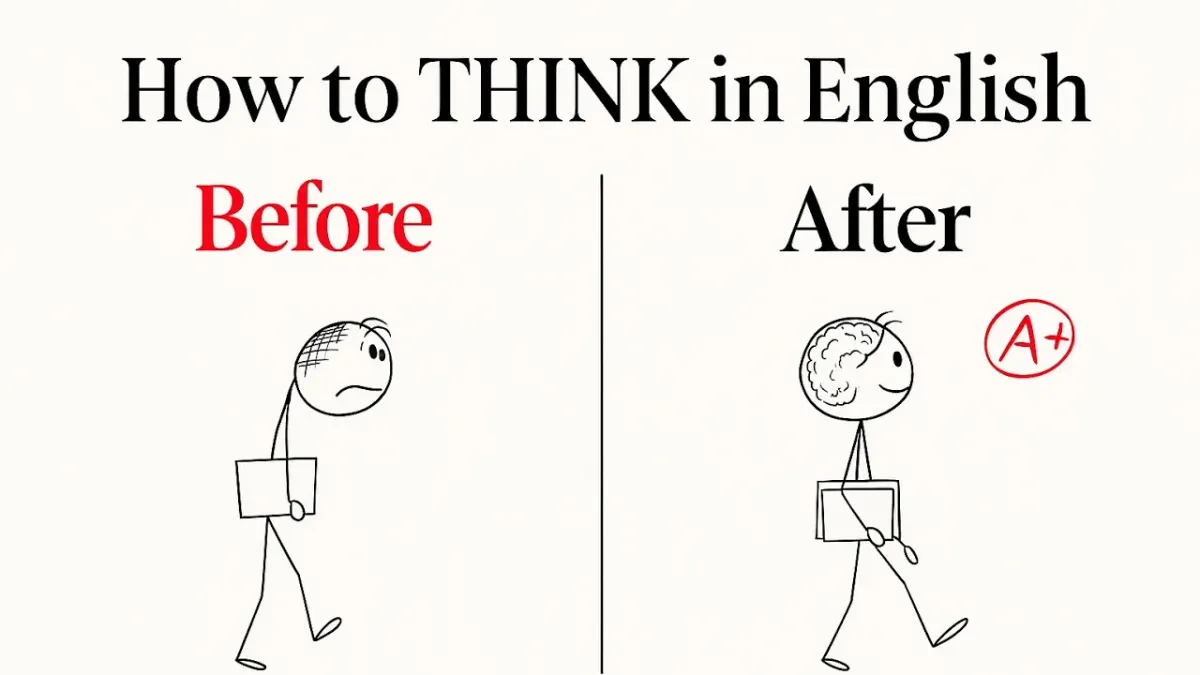
Get my English Grammar course from here https://www.udemy.com/course/learn-english-grammar-with-grammar-made-simple/?referralCode=A6E35D22C2AD89C63F8A

The first step to making your next game is to come up with an idea. But where do game designers get their ideas? And how do you know if the idea is worth pursuing? Let's find out, in part one of Game Dev 101.

Blender 5.0 has released a few new modifiers like the array, instance on elements, and scatter on surface. These new modifiers make complex animations possible without having to start learning geometry nodes. Motion graphics in Blender is heavily reliant on geometry nodes, but with these new features, you can make some cool animations without nodes. Is this the end of nodes in Blender? Definitely not, but it definitely makes us less reliant on them when starting out.

In this article, I provide an in-depth overview of Google's NotebookLM, compare it to ChatGPT's Study Mode, and share my insights on how to use this tool effectively for learning.

It is finally here, the computer build you have (and possibly the whole world) been waiting for. The Linus Tech Tips and Linus Torvalds Collab PC build! Linus Torvalds talks through Linux development, parts selection, and even gives a glimpse into some cool projects he works on in his spare time. This project was made with a lot of hard work from our team and of course Linus Torvalds generous time. Discuss on the forum: https://linustechtips.com/topic/1627666-building-the-perfect-linux-pc-with-linus-torvalds/ Check out the parts from the build: AMD Ryzen Threadripper 9960X: https://geni.us/dNscax GIGABYTE TRX50 AERO D Motherboard: https://geni.us/Oj7y3Ax Samsung SSD 9100 PRO 2TB SSD: https://geni.us/iaGudc9 Noctua NH-U14S TR5-SP6 Cooler: https://geni.us/BqA5IF Intel Arc B580 GPU: https://geni.us/NoCqABH Fractal Design Torrent E-ATX Case: https://geni.us/FpyaBB Seasonic PRIME TX-1600 1600W 80+ Titanium PSU: https://geni.us/ghd9iU ASUS ProArt Display PA32QCV 31.5" 6K HDR Monitor: https://geni.us/YHAk