atexthub

Posts tagged with "language"

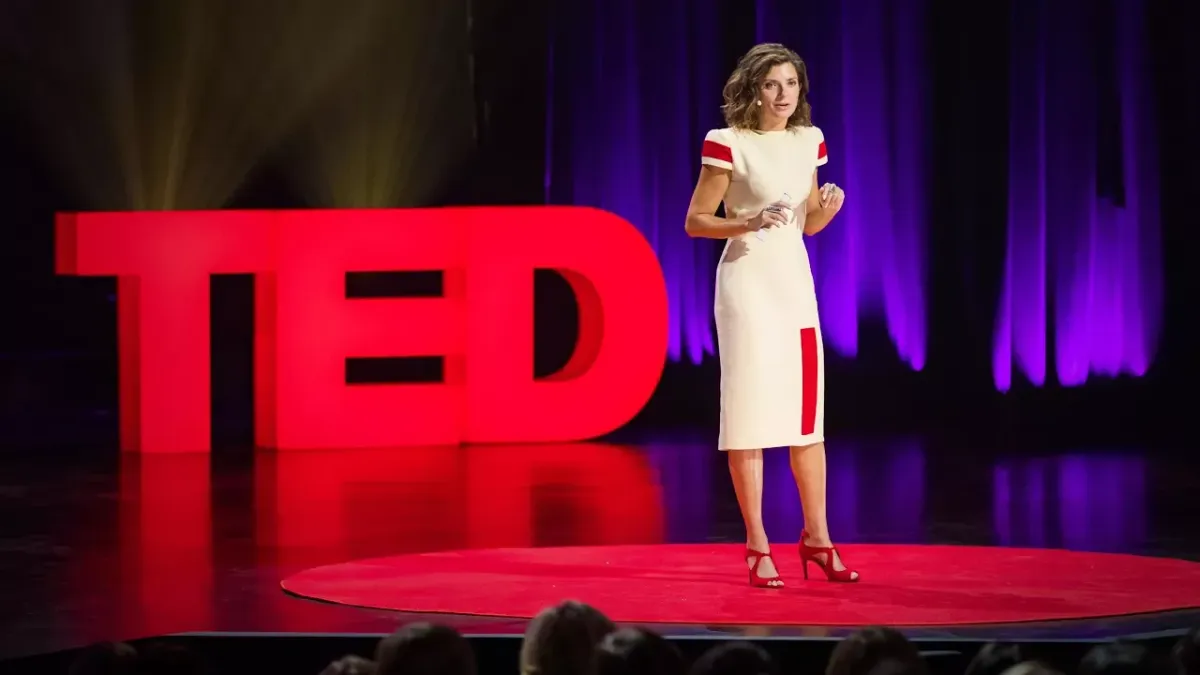
How language shapes the way we think | Lera Boroditsky | TED
TED

How language shapes the way we think | Lera Boroditsky | TED

There are about 7,000 languages spoken around the world -- and they all have different sounds, vocabularies and structures. But do they shape the way we think? Cognitive scientist Lera Boroditsky shares examples of language -- from an Aboriginal community in Australia that uses cardinal directions instead of left and right to the multiple words for blue in Russian -- that suggest the answer is a resounding yes. "The beauty of linguistic diversity is that it reveals to us just how ingenious and how flexible the human mind is," Boroditsky says. "Human minds have invented not one cognitive universe, but 7,000."

Etymology and surprising origins of English words
Snap Language

Etymology and surprising origins of English words

Learn about etymology, the study of word origins and derivations in historical linguistics, and the influence of a Proto-Indoeuropean (PIE) language in the formation of English and other modern languages in Europe, Russia, and Asia. Highlighted is how etymologists have come up with a theoretical model of the Proto-Indoeuropean language; how Modern English was influenced by the Proto-Germanic and Latin languages, both descendants of PIE; and how English continues to borrow words from other languages.

Does grammar matter? - Andreea S. Calude
TED-Ed

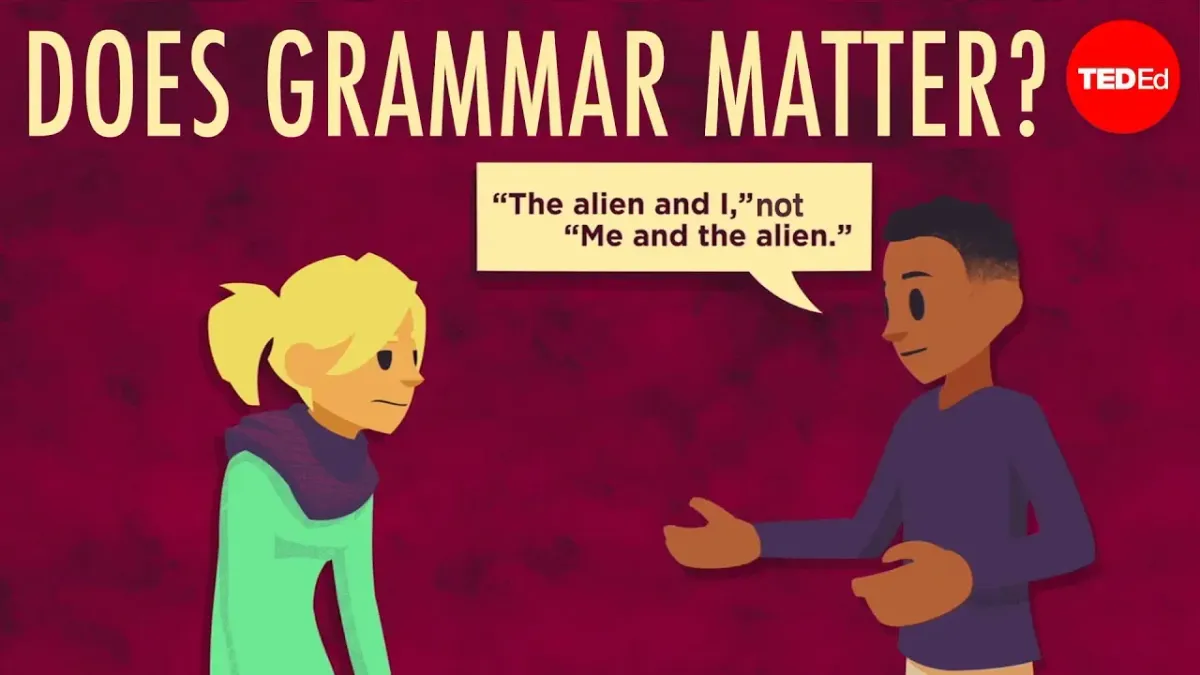
Does grammar matter? - Andreea S. Calude

It can be hard sometimes, when speaking, to remember all of the grammatical rules that guide us when we’re writing. When is it right to say “the dog and me” and when should it be “the dog and I”? Does it even matter? Andreea S. Calude dives into the age-old argument between linguistic prescriptivists and descriptivists — who have two very different opinions on the matter.

How computers translate human language - Ioannis Papachimonas
TED-Ed

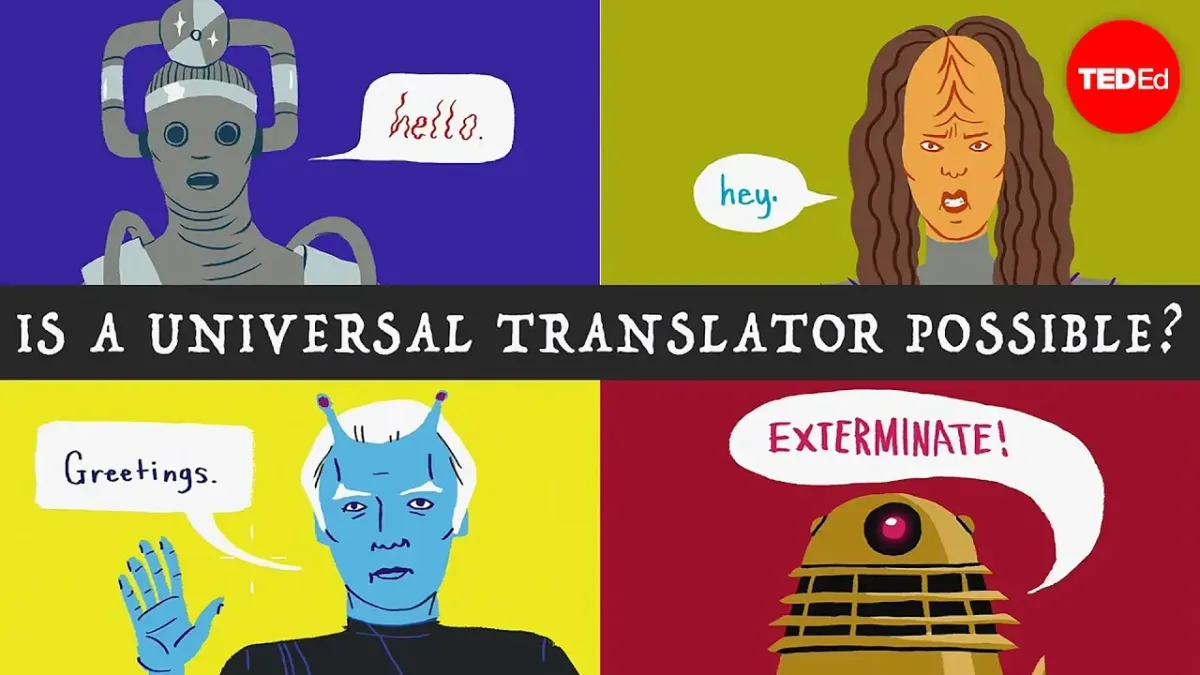
How computers translate human language - Ioannis Papachimonas

Is a universal translator possible in real life? We already have many programs that claim to be able to take a word, sentence, or entire book in one language and translate it into almost any other. The reality, however, is a bit more complicated. Ioannis Papachimonas shows how these machine translators work, and explains why they often get a bit mixed up.

Erin McKean: Go ahead, make up new words!
TED

Erin McKean: Go ahead, make up new words!

In this fun, short talk from TEDYouth, lexicographer Erin McKean encourages — nay, cheerleads — her audience to create new words when the existing ones won’t quite do. She lists out 6 ways to make new words in English, from compounding to “verbing,” in order to make language better at expressing what we mean, and to create more ways for us to understand one another.

How languages evolve - Alex Gendler
TED-Ed

How languages evolve - Alex Gendler

Over the course of human history, thousands of languages have developed from what was once a much smaller number. How did we end up with so many? And how do we keep track of them all? Alex Gendler explains how linguists group languages into language families, demonstrating how these linguistic trees give us crucial insights into the past.

Are Elvish, Klingon, Dothraki and Na'vi real languages? - John McWhorter
TED-Ed

Are Elvish, Klingon, Dothraki and Na'vi real languages? - John McWhorter

What do Game of Thrones' Dothraki, Avatar's Na'vi, Star Trek's Klingon and LOTR's Elvish have in common? They are all fantasy constructed languages, or conlangs. Conlangs have all the delicious complexities of real languages: a high volume of words, grammar rules, and room for messiness and evolution. John McWhorter explains why these invented languages captivate fans long past the rolling credits.

Birth of a nickname - John McWhorter
TED-Ed

Birth of a nickname - John McWhorter

Where do nicknames come from? Why are Ellens called Nellie and Edwards Ned? It's all a big misunderstanding from the early days of the English language, a misunderstanding that even the word nickname itself derives from. John McWhorter tracks the accidental evolution of some familiar diminutives.

A brief history of plural word...s - John McWhorter
TED-Ed

A brief history of plural word...s - John McWhorter

All it takes is a simple S to make most English words plural. But it hasn't always worked that way (and there are, of course, exceptions). John McWhorter looks back to the good old days when English was newly split from German -- and books, names and eggs were beek, namen and eggru!

How did English evolve? - Kate Gardoqui
TED-Ed

How did English evolve? - Kate Gardoqui

What is the difference between "a hearty welcome" and "a cordial reception"? In a brief, action-packed history of the English language, Kate Gardoqui explains why these semantically equal phrases evoke such different images.