How do contraceptives work? - NWHunter
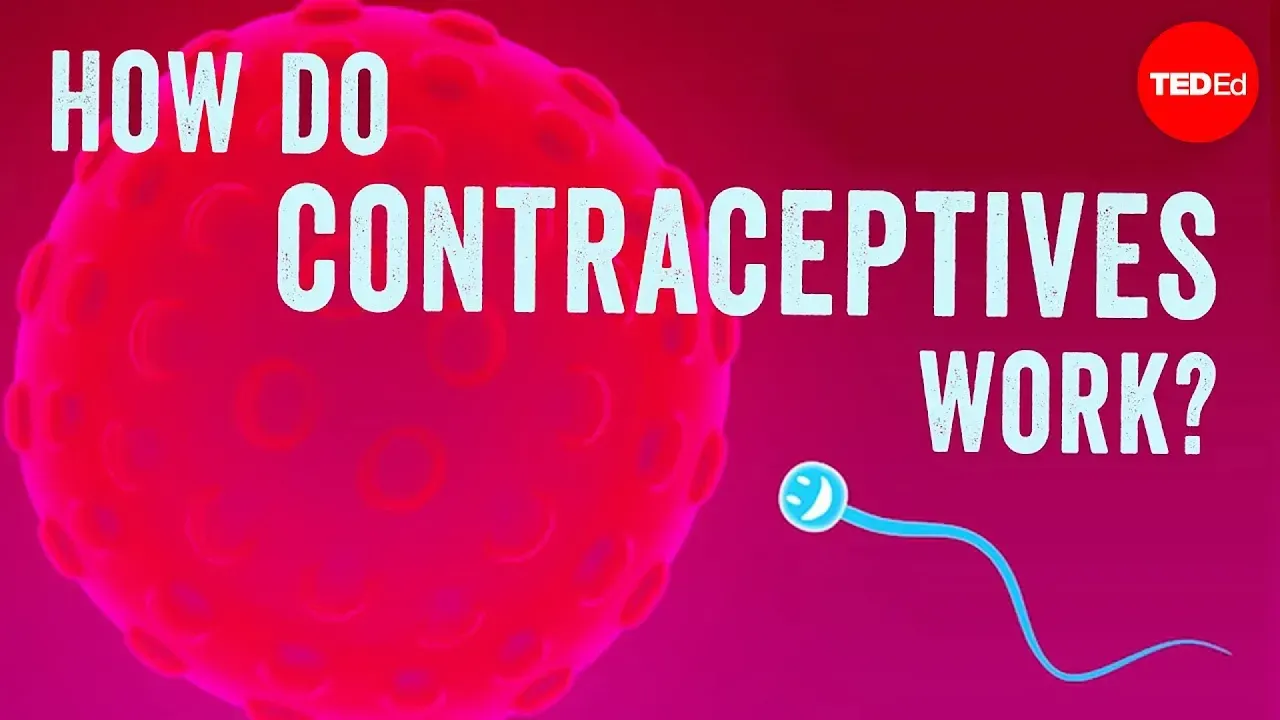
Contraceptives are designed to prevent pregnancy in three basic ways: they either block sperm, disable sperm before they reach the uterus, or suppress ovulation. But is one strategy better than the other? And how does each one work? NWHunter describes the mechanics behind different kinds of contraceptives.
Lesson by NWHunter, animation by Draško Ivezić.
Mon Sep 19 2016 - Written by:
TED-Ed
Here’s what has to happen for pregnancy to occur after sexual intercourse. Sperm must swim up the vagina, through the cervical opening, upwards through the uterus, and into one of the two fallopian tubes. If an egg, released during that month’s ovulation, is in the tube, one sperm has a chance to fertilize it.
Contraceptives are designed to prevent this process, and they work in three basic ways. They block the sperm, disable sperm before they reach the uterus, or suppress ovulation.
Block
Block is the simplest. Male and female condoms prevent sperm from coming into contact with the vaginal space. That barrier is also why they, unlike other contraceptive methods, are able to prevent transmission of certain sexually transmitted diseases. Meanwhile, the diaphragm, cervical cap, and sponge work by being placed over the cervix, barricading the entrance to the uterus. These contraceptives are sometimes called barrier methods and can be used with spermicides, an example of the second category, disable.
Disable
A spermicide is a chemical that immobilizes and destroys sperm. Today’s spermicides come as foam, cream, jelly, suppositories, and even a thin piece of translucent film that dissolves in the vagina. These products can be inserted directly into the vagina before intercourse, or can be combined with block methods, like a diaphragm or condom, for added protection.
Suppress
The third category for preventing pregnancy works by suppressing the action of an egg maturing in the ovary. If there isn’t an egg available in the fallopian tube, there’s nothing for sperm to fertilize. Hormonal contraceptives, including the pill, the patch, the Depo shot, and the vaginal ring all release synthetic versions of various combinations of progesterone and estrogen. This hormone cocktail suppresses ovulation, keeping the immature egg safely sequestered in the ovary. Synthetic progesterone also has a block trick up its sleeve. It makes cervical mucus too thick and sticky for sperm to swim through easily.
There are other contraceptives that use multiple approaches at the same time. For example, many IUDs, or intrauterine devices, contain synthetic hormones which suppress ovulation. Some also contain copper, which disable sperm while also making egg implantation in the uterus difficult.
Effectiveness and Considerations
Block, disable, or suppress: is one strategy better than the other? There are differences, but a lot of it has to do with how convenient and easy it is to use each contraceptive correctly. For example, male condoms would be about 98% effective if everyone used them perfectly. That 98% means if 100 couples correctly used condoms for a year, two women would get pregnant. But not everyone uses them correctly, so they’re only 82% effective in practice. Other methods, like the patch and pill, are 99% effective when they’re used perfectly. But in practice, that’s 91%. Spermicide is only 85% effective, even with perfect usage, and just 71% effective with typical usage.
Another important consideration in the choice of contraceptives are side effects, which almost exclusively affect women rather than men. Hormonal methods in particular can cause symptoms like headaches, nausea, and high blood pressure, but they vary from woman to woman. That’s why these methods require a prescription from a doctor.
The choice of contraceptive method is a personal one, and what works best for you now may change later. Scientists also continue to research new methods, such as a male pill that would prevent sperm production. In the meantime, there are quite a few options to block sperm, disable them, or suppress eggs and keep them out of reach.