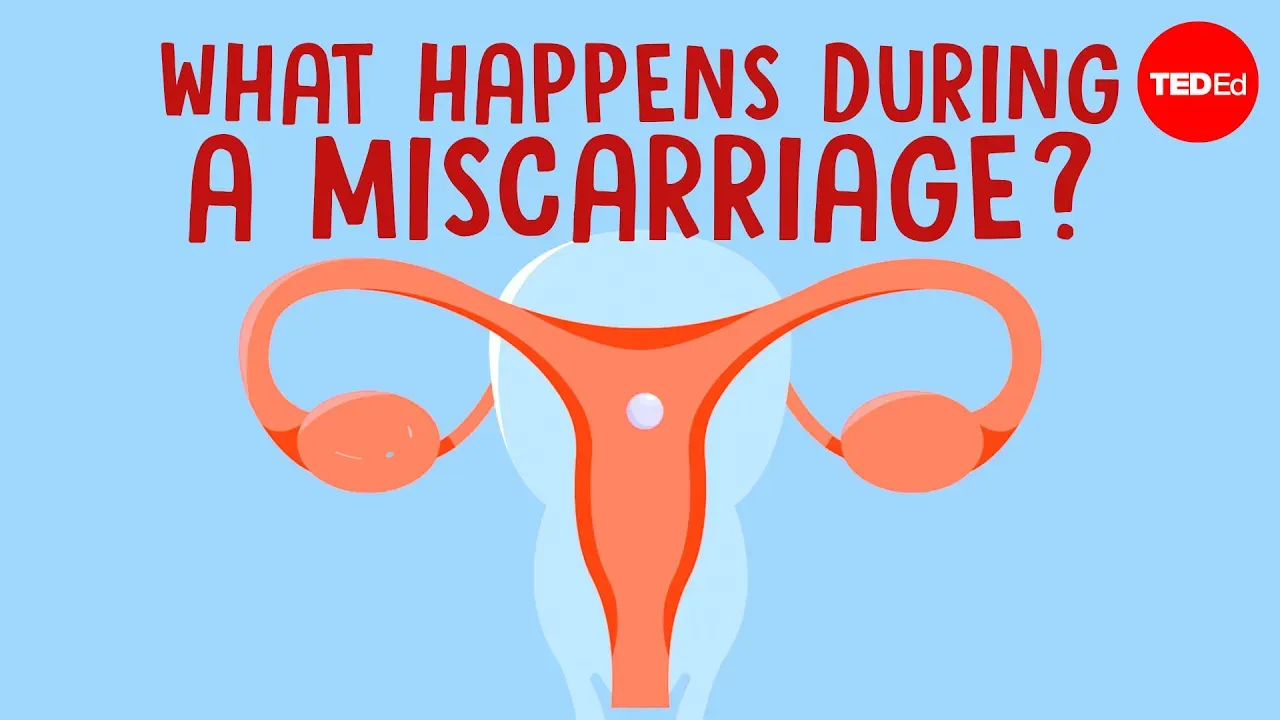
What happens in your body during a miscarriage? - Nassim Assefi and Emily M. Godfrey
Explore what happens in the body during miscarriage, and learn about three common treatment options for pregnancy loss.
--
Globally, around 23 million pregnancies end in miscarriage each year. Despite how common it is, miscarriage can still feel isolating, and for some, emotionally traumatizing. And myths about miscarriage add to the stigma, leading many to blame themselves for the loss. So what happens in the body during miscarriage? Nassim Assefi & Emily M. Godfrey take a closer look at pregnancy loss and treatment.
Lesson by Nassim Assefi and Emily M. Godfrey, directed by Lené van Heerden, We Are Batch TV.
Tue Jul 02 2024 - Written by:
TED-Ed
Globally, around 23 million pregnancies end in miscarriage each year. Despite how common it is, miscarriage is still considered a taboo subject. The experience can feel isolating, and for some, emotionally traumatizing. And myths about miscarriage add to the stigma, leading many to blame themselves for the loss. However, most miscarriages are unpreventable and caused by factors beyond a person’s control. They happen because pregnancy is a complex process, which requires careful choreography between the fertilized egg and uterus. In fact, of every three eggs that are fertilized, only one progresses to a live birth.
What happens during the first 12 weeks of pregnancy?
So, let’s take a closer look at what happens in the body during the first 12 weeks of pregnancy, when a majority of miscarriages occur. Pregnancy is maintained by several hormones: progesterone and estrogen, produced within the ovaries, and human chorionic gonadotropin, or hCG, sent out by the fertilized egg.
During the first half of each menstrual cycle estrogen levels increase, followed by an increase in progesterone. These hormones signal to the uterine lining to enhance its blood supply and thicken its mucosa, creating the conditions needed for an early pregnancy to grow. If an egg arrives at the uterus unfertilized, these hormone levels naturally drop, triggering contractions and the shedding of the uterine lining in menstruation.
Yet, if the egg arrives fertilized, its outermost layer begins producing hCG. This hormone travels to the ovaries and stimulates the continued release of progesterone and estrogen, halting menstruation. hCG also binds to receptors on the uterine lining to prevent it from rejecting the fertilized cell mass as it embeds. This is a stage where things often go awry. For reasons that are not fully understood, as many as one third of fertilized eggs fail to properly attach, passing undetected in a normal-seeming menstrual period.
And implantation is only the first hurdle for fertilized eggs that do properly attach. Once burrowed in the uterine lining, the rapidly dividing fertilized egg’s own DNA guides its growth. Chromosomal abnormalities can therefore cause irregular development, or stop embryo growth entirely.
What causes a miscarriage?
While many mistakenly believe their miscarriage was caused by factors like stress, exercise, vaccination, or past birth control use, a vast majority are in fact caused by these genetic issues or other health factors beyond a person’s control.
What are the treatment options?
Some pregnancy losses lead to few, if any, noticeable physical symptoms. In other cases, hCG levels drop, followed by a decrease in progesterone, causing bleeding and cramping. In either situation, there are three treatment options— two of which are also used for induced abortion procedures, when patients choose to end a pregnancy.
The first of the three options is what’s commonly known as the “watch-and-wait” method. A person waits for pregnancy hormones to drop further, allowing the pregnancy tissue to be released with the shedding uterine wall. This approach works up to 90% of the time, but it can involve several weeks of unpredictable pain and bleeding.
Others may opt for option two, taking the pills mifepristone and misoprostol in sequence. The first works hormonally, by blocking progesterone receptors, and the second mimics a molecule which induces labor, stimulating uterine contractions and causing the cervix to soften and dilate. After taking the second pill, the process normally takes 1 to 6 hours. It’s often safely self-managed, and can be done privately at home.
The third possible treatment option is known as vacuum aspiration. During this five-minute procedure, the healthcare provider numbs the cervix, then places a thin tube connected to a syringe-like device to remove the pregnancy tissue. Treatment choice is often based on the pregnant person’s medical history, timeline, expectations, and personal preferences, and all three methods have proven to be safe and effective.
Access to care and support
However, without the medication or vacuum aspiration options, an untreated or an incomplete miscarriage can lead to life-threatening infections and hemorrhage. And because they are the same treatments used in induced abortion care, they can be harder to access and even criminalized in some areas. Beyond this, over half the world’s population lacks access to reliable basic healthcare, including these essential reproductive health services.
While pregnancy means different things to different people at different points in their lives, for many, losing a pregnancy can be devastating and overwhelming. During this difficult time, everyone deserves to be met with care and support, and to have access to these life-saving treatments.