How do your hormones work? - Emma Bryce
Over our lifetimes, our bodies undergo a series of extraordinary metamorphoses: we grow, experience puberty, and many of us reproduce. Behind the scenes, the endocrine system works constantly to orchestrate these changes. Emma Bryce explains how this system regulates everything from your sleep to the rhythm of your beating heart, exerting its influence over each and every one of your cells.
Lesson by Emma Bryce, animation by Daniel Gray.
Thu Jun 21 2018 - Written by:
TED-Ed
Over the course of our lifetimes, our bodies undergo a series of extraordinary metamorphoses: we grow, experience puberty, and many of us reproduce. Behind the scenes, the endocrine system works constantly to orchestrate these changes.
Alongside growth and sexual maturity, this system regulates everything from your sleep to the rhythm of your beating heart, exerting its influence over each and every one of your cells.
The endocrine system relies on interactions between three features to do its job: glands, hormones, and trillions of cell receptors.
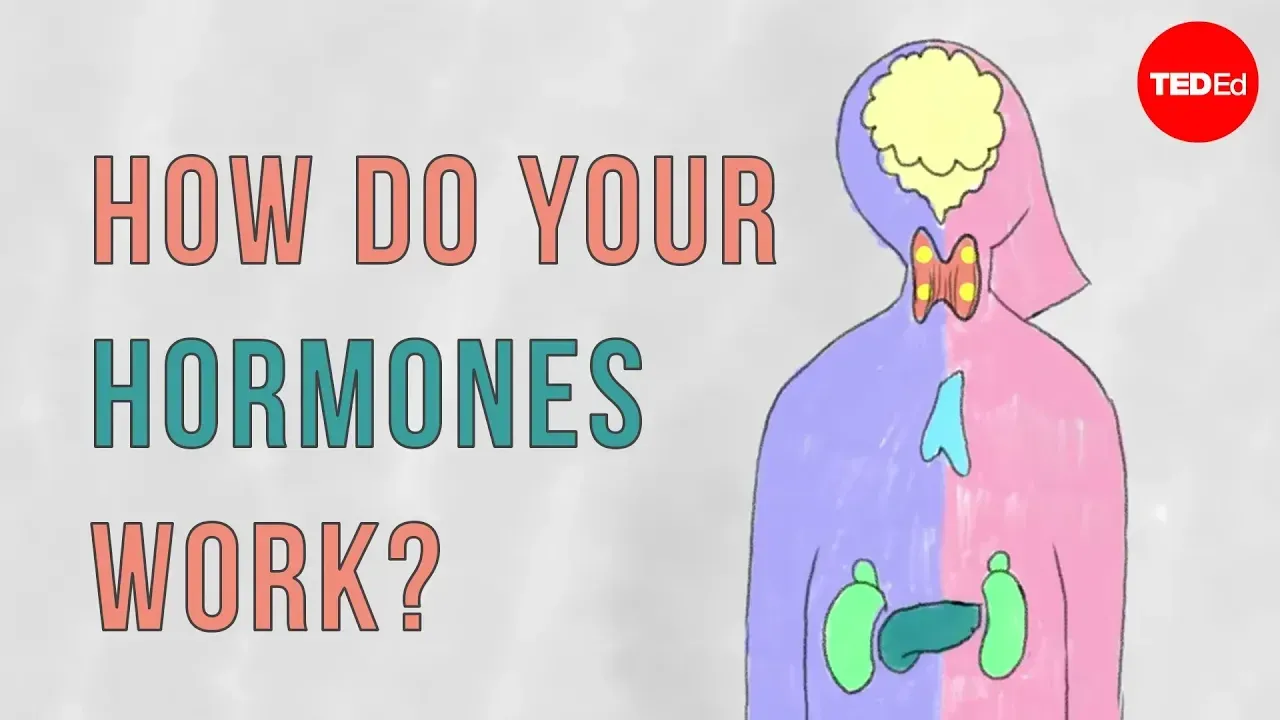
Firstly, there are several hormone-producing glands: three in your brain, and seven in the rest of your body. Each is surrounded by a network of blood vessels, from which they extract ingredients to manufacture dozens of hormones. Those hormones are then pumped out in tiny amounts, usually into the bloodstream.
From there, each hormone needs to locate a set of target cells in order to bring about a specific change. To find its targets, it’s helped along by receptors, which are special proteins inside or on the cell’s surface. Those receptors recognize specific hormones as they waft by, and bind to them. When this happens, that hormone-receptor combination triggers a range of effects that either increase or decrease specific processes inside the cell to change the way that cell behaves.
By exposing millions of cells at a time to hormones in carefully-regulated quantities, the endocrine system drives large-scale changes across the body.
Take, for instance, the thyroid and the two hormones it produces, triiodothyronine and thyroxine. These hormones travel to most of the body’s cells, where they influence how quickly those cells use energy and how rapidly they work. In turn, that regulates everything from breathing rate to heartbeat, body temperature, and digestion.
Hormones also have some of their most visible—and familiar—effects during puberty. In men, puberty begins when the testes start secreting testosterone. That triggers the gradual development of the sexual organs, makes facial hair sprout, and causes the voice to deepen and height to increase. In women, estrogen secreted from the ovaries signals the start of adulthood. It helps the body develop, makes the hips widen, and thickens the womb’s lining, preparing the body for menstruation or pregnancy.
An enduring misconception around the endocrine system is that there are exclusively male and female hormones. In fact, men and women have estrogen and testosterone, just in different amounts. Both hormones play a role in pregnancy, as well, alongside more than 10 other hormones that ensure the growth of the fetus, enable birth, and help the mother feed her child.
Such periods of hormonal change are also associated with fluctuations in mood. That’s because hormones can influence the production of certain chemicals in the brain, like serotonin. When chemical levels shift, they may cause changes in mood, as well. But that’s not to say that hormones have unlimited power over us. They’re frequently viewed as the main drivers of our behavior, making us slaves to their effects, especially during puberty. But research shows that our behavior is collectively shaped by a variety of influences, including the brain and its neurotransmitters, our hormones, and various social factors. The primary function of the endocrine system is to regulate our bodily processes, not control us.
Sometimes disease, stress, and even diet can disrupt that regulatory function, however, altering the quantity of hormones that glands secrete or changing the way that cells respond. Diabetes is one of the most common hormonal disorders, occurring when the pancreas secretes too little insulin, a hormone that manages blood sugar levels. And hypo- and hyperthyroidism occur when the thyroid gland makes too little or too much thyroid hormone. When there’s too little thyroid hormone, that results in a slowed heart rate, fatigue, and depression, and when there’s too much thyroid hormone, weight loss, sleeplessness, and irritability.
But most of the time, the endocrine system manages to keep our bodies in a state of balance. And through its constant regulation, it drives the changes that ultimately help us become who we are.