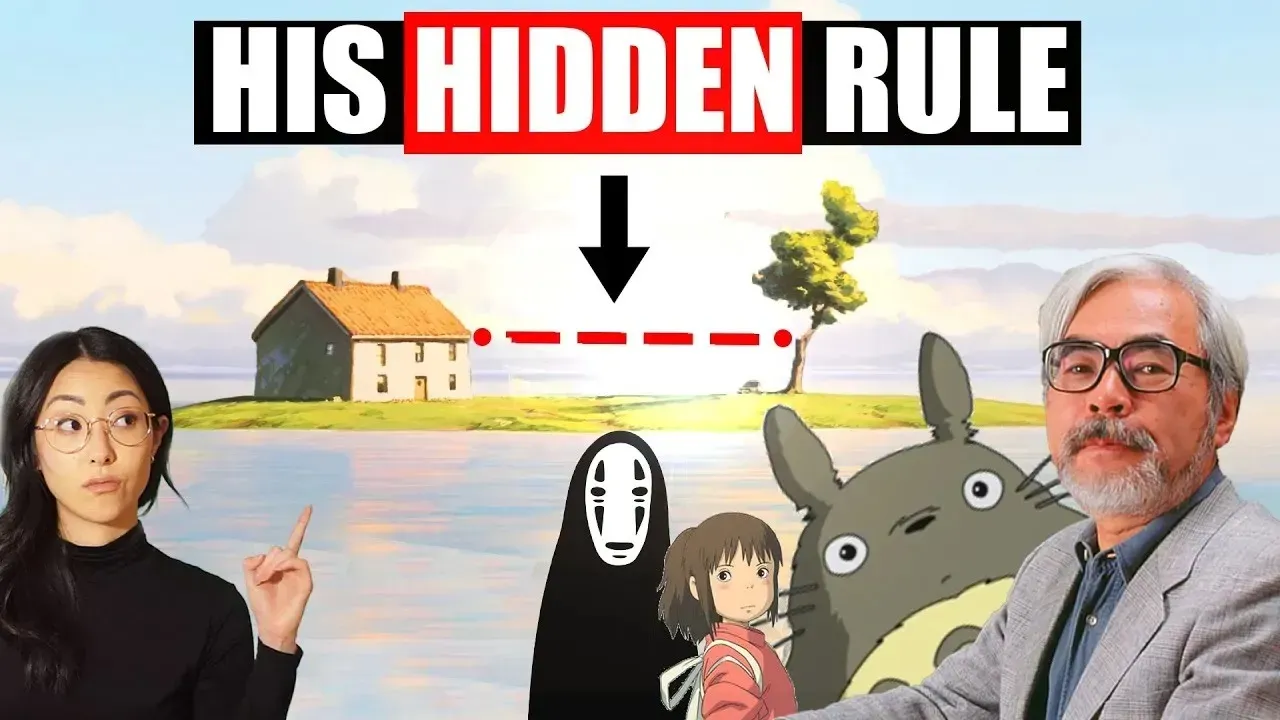
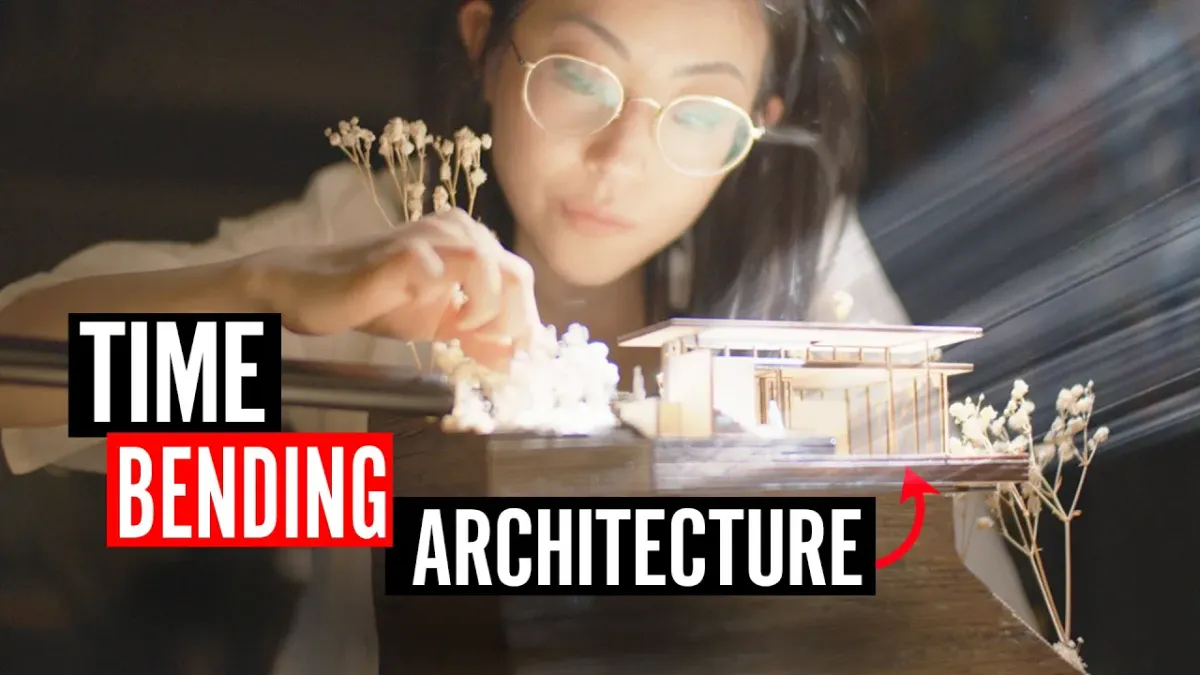
Can this house slow down time?
I'm Dami, a licensed Architect living in Vancouver, BC. I make videos about architecture, career, and creativity.
I'm Dami, a licensed Architect living in Vancouver, BC. I make videos about architecture, career, and creativity.
Sat Jun 03 2023 - Written by: DamiLee
Studio Ghibli movies have a really special place in my heart. They give me this feeling that’s actually kind of hard to explain—a nostalgia, memories of a time when things were simple. And it’s not just me; these movies have captured the hearts of so many people all over the world because they manage to kindle these universal emotions that are at the core of being human.
The secret is in how they carefully craft these imaginary worlds. So, let’s try to unpack Studio Ghibli movies from an architectural point of view and try to understand how they are able to bring out these emotions. What is it about the worlds that they’re building? And let’s also discuss if it’s possible for them to be made with AI.
Studio Ghibli films come alive thanks to the rich storylines and the strong characters, but the environment plays an equally important role in making the films what they are. This is one of my favorite scenes from the movie “Spirited Away.” The main character, Chihiro, who’s just 10 years old, has just arrived and some really crazy stuff has happened; her parents got turned into pigs. She’s really had to find her way to survive in this very strange world by herself, and now she has to go find the switch to ask if she could save his friend, Haku.
And for almost two minutes, nothing really happens. It’s just Chihiro sitting on the train. But it’s potentially one of the most powerful moments in the movie because it gives us space to breathe and reflect on what this character just went through. Studio Ghibli movies are full of scenes like this: empty moments where we can process what’s going on and build empathy and a connection to the characters and the story on a deeper level.
There’s a concept in Japanese called “Ma” (間). It’s the space between objects or elements. It’s the time between the beginning and the end. It’s the gap, the space, or pause. It’s the negative space. But Ma is not simply an absence of things; it’s an act of presence that shapes the way we perceive and interact with the world around us. It emphasizes the tension and interplay between objects rather than just focusing on the objects themselves. Every Studio Ghibli movie will craft these negative spaces and negative moments with an incredible amount of detail, specifically sensory detail.
Even though movies are mainly a visual and auditory medium, in moments like this, you can almost feel the dampness on your skin or the wind in your hair. When we touch something, that sensory information goes from the receptors in the skin to the spinal cord, to the brain stem, then to the somatosensory cortex, which interprets the touch. At the same time, that information is also sent to the amygdala, which evaluates the information and initiates an emotional response. The amygdala is actually responsible for processing emotions and for memory formation and also for memory storage. So by heightening these sensory details in these empty moments, we’re not just looking at the objects on the screen; we’re feeling. We’re feeling the haptic experiences, and we’re becoming immersed in emotions and even in memories.
Hayao Miyazaki says that the sensory experiences make up the animations, and I think he’s saying they are the foundation of every person. This leads to good animation. You can see how this even informs how they craft the spaces. This is a pretty significant moment from the movie “Spirited Away” that marks the main character’s transition from the human world to the spirit world. Again, nothing really happens. You’re just left to feel the space.
The entire world of Ghibli is crafted with spaces that have this calm, almost ethereal atmosphere, and I think they’re able to do this because of their unique understanding of shadows. This dappled light that filters through the trees—there’s a word for this in Japanese, it’s called “Komorebi” (木漏れ日). I think it has this kind of ethereal, otherworldly quality to it. These soft, shifting patterns of light and shadow are used to create a dream-like atmosphere in Studio Ghibli films. But it’s more than that.
In the book “In Praise of Shadows,” Junichiro Tanizaki reflects on the beauty of darkness and shadows in Japanese aesthetics, especially in contrast to Western aesthetics. He says, “Westerners make the most of lighting fixtures, which are designed to produce light in practical quantities. They go to great pains to direct light where it’s needed, and yet they despise what little shadows remain. Japanese ancestors, forced to live in dark rooms, presently came to discover beauty in shadows, ultimately to guide shadows towards beauty’s ends. So Japanese, they treasure their darkness instead of fearing it. Darkness, they know, is the richest source of beauty.”
Shadows are also used more actively throughout the movies to add another narrative element. Like in this instance, the shadow foreshadows what’s going to be happening later because these stalls become populated with spirits. Here, Chihiro runs into Haku, but just behind him, you can see the shadow moving really fast, meaning that time is passing really fast and it’s getting dark really fast. So by interjecting the story with moments and spaces where you can pause, and by detailing those moments with sensory elements, Hayao Miyazaki is able to create really unique and emotional experiences.
But all of this extra level of detail and all of these long pauses—if you’re looking at the movie from an efficiency perspective, you’re actually taking away valuable time that you could be learning about the characters through action and dialogue. So instead, what he does is he uses the environments as a tool to paint a fuller picture of the narrative and the characters.
A really good example is the contrast between Yubaba and Zeniba’s homes. The two sisters are twins, so by looking at their appearance, you actually can’t tell who is who, and you only get a limited amount of screen time with each character. But you can get a much fuller understanding of each of the sisters by looking at their apartments. Yubaba is the head honcho of the bathhouse; she’s the evil sister who turned Chihiro’s parents into pigs. She lives right here on the top floor of the bathhouse, and Chihiro has to go through a very long elevator ride to get to the top floor.
Before even getting into the apartment, you have this grand entry experience, full of ornaments and details. This procession of rooms is called an “enfilade.” This was a common arrangement in Baroque palaces in the 17th century. The first room is the public room, and the royal bedroom will be at the very end, and everything in between were state rooms used for entertaining. You are allowed to go as far as your rank would allow. So before we even meet Yubaba, you get this anticipation and the sense that she’s really at the top of the food chain. Then once you get to her room, it’s a completely different style from the rest of the building or the sleeping quarters of workers, which is more understated in a traditional Japanese style. So from this, you can see that not only is she greedy for wealth and power, but she’s kind of force-fit into the rest of the environment, almost in a gimmicky way.
In contrast, Zeniba’s house is in a remote little cottage farm behind a thicket. You’re led through this dark path by a magical lamppost, and the house is simple and understated. It looks like it’s modeled after a traditional Irish cottage from the 1850s. The interior is rustic, it’s warm and cozy, and fairly minimal, which reflects Zeniba’s humble and down-to-earth character. What’s interesting is that neither of these architectural styles are used intentionally to create a literal connection to the Baroque Period or a traditional Irish Cottage. That’s why a lot of the times, architecture is used just as a reference, but it’s always a combination of different styles to create a certain mood or a feeling.
The thing about architecture is that there’s the learned, intellectual understanding of a building or its type, but there’s also the subconscious, purely emotional connection to that space. And so the question is, can these spaces, or these haptic experiences, or these moments of emptiness—can they be generated by AI?
Hayao Miyazaki has said, “I strongly feel that this is an insult to life itself.” And I understand where he’s coming from. For him, careful observation and experience of the world is the key to bringing his animations to life. He makes a direct correlation between personal experience and the skills of an animator, and he actually goes as far as to say that someone who eats instant noodles three times a day cannot be an animator. The core of what makes his movies special—the feeling, the tactility, the emotions, the memories, all those intangible qualities—they can’t be generated by AI because they need to be experienced first.
Now, I do want to play the devil’s advocate here. What are the financial implications of this? Let’s say, for the cost of doing one movie and getting people to hand-animate every scene, every blade of grass, they could do three movies with the help of AI. And even before AI, they’ve been known to produce films at a much slower speed compared to other studios. So can the revenue from the projects recoup the costs? I don’t know.
AI is getting better and better every single day, and it is making a lot of processes a lot more efficient. But what we do know is that pretty much every single movie they’ve released since their first international debut, “Nausicaä of the Valley of the Wind,” has been a box office hit. No matter how good and how convenient technology gets, we still crave the human experience. I mean, we’ve seen this through the pandemic. We still crave meeting up with people, we want to go outside, we want to travel, even if it means getting in trouble. And maybe that’s the one thing about us that we can’t change. We are sensory, experiential creatures. We need to feel things.
And so if I were to distill their strategy for success, their secret to evoking these strange emotions in us, I think it’s because they focus on hitting that nerve that makes us feel just a little bit more alive, just a little bit more human.
I'm Dami, a licensed Architect living in Vancouver, BC. I make videos about architecture, career, and creativity.

I'm Dami, a licensed Architect living in Vancouver, BC. I make videos about architecture, career, and creativity.
![MEGACITIES: Reality or Fiction? [Architecture in Sci-Fi]](/_astro/megacities-reality-or-fiction-architecture-in-sci-fi.DVnYiCV-_S6iGH.webp)
I'm Dami, a licensed Architect living in Vancouver, BC. I make videos about architecture, career, and creativity.

How does a world of speed and information impact our brains, our culture, and the architecture that supports learning?
![Can we REALLY build on Mars? [SPACE ARCHITECTURE]](/_astro/can-we-really-build-on-mars-space-architecture.BXkVsYCN_Z1YxzuQ.webp)