atexthub

atexthub just a text hub.

Destruction - Mind Field (Ep 3)
Vsauce

Destruction - Mind Field (Ep 3)

We humans love to build, create, and organize. So why do we also love to destroy things? Can violently breaking stuff really help to calm us down, or does it just make us more angry? In this episode of Mind Field, I take a hard look at our urge to destroy.
Conformity - Mind Field (Ep 2)
Vsauce

Conformity - Mind Field (Ep 2)

We are all unique individuals. We follow the beat of our own drum. We wouldn’t throw our own beliefs out the window just to fit in...or would we? In this episode of Mind Field, I demonstrate the strong, human urge to conform, and just how far people will go to fall in with the crowd.

Isolation - Mind Field (Ep 1)
Vsauce

Isolation - Mind Field (Ep 1)

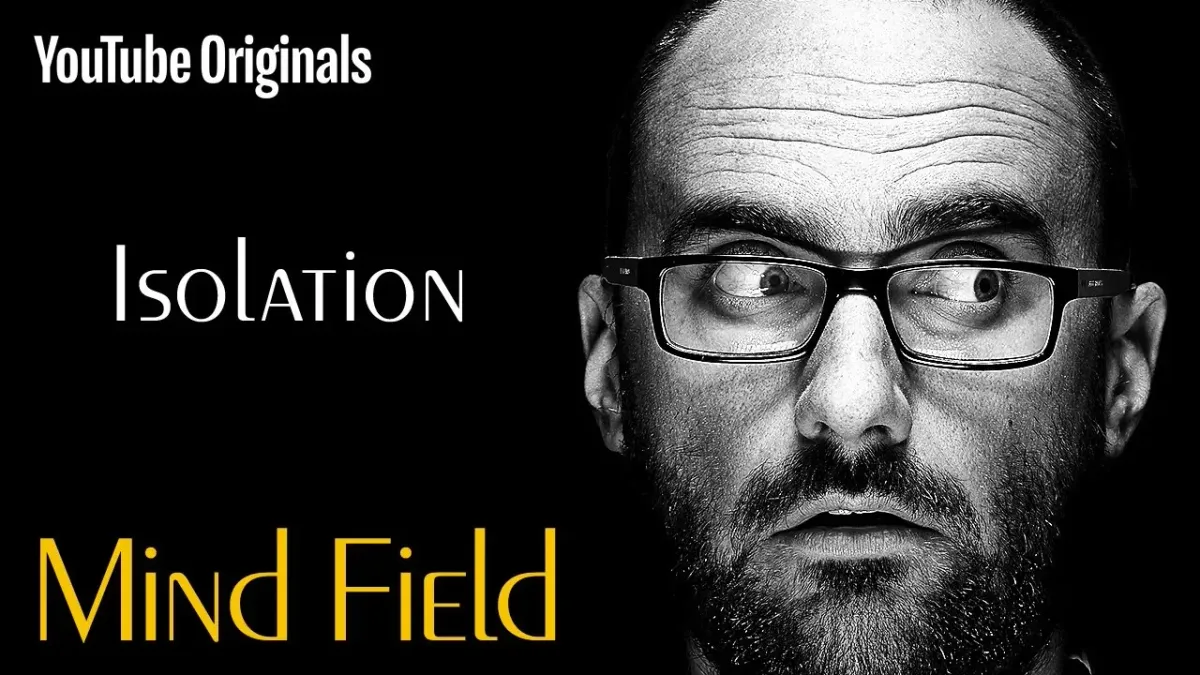
What happens when your brain is deprived of stimulation? What effect does being cut off from interaction with the outside world have on a person? What effect does it have on me, when I am locked in a windowless, soundproof isolation chamber for three days? In this episode of Mind Field, I take both an objective and a very intimate look at Isolation.

How do contraceptives work? - NWHunter
TED-Ed

How do contraceptives work? - NWHunter

Contraceptives are designed to prevent pregnancy in three basic ways: they either block sperm, disable sperm before they reach the uterus, or suppress ovulation. But is one strategy better than the other? And how does each one work? NWHunter describes the mechanics behind different kinds of contraceptives. Lesson by NWHunter, animation by Draško Ivezić.

Does grammar matter? - Andreea S. Calude
TED-Ed

Does grammar matter? - Andreea S. Calude

It can be hard sometimes, when speaking, to remember all of the grammatical rules that guide us when we’re writing. When is it right to say “the dog and me” and when should it be “the dog and I”? Does it even matter? Andreea S. Calude dives into the age-old argument between linguistic prescriptivists and descriptivists — who have two very different opinions on the matter.

How computers translate human language - Ioannis Papachimonas
TED-Ed

How computers translate human language - Ioannis Papachimonas

Is a universal translator possible in real life? We already have many programs that claim to be able to take a word, sentence, or entire book in one language and translate it into almost any other. The reality, however, is a bit more complicated. Ioannis Papachimonas shows how these machine translators work, and explains why they often get a bit mixed up.

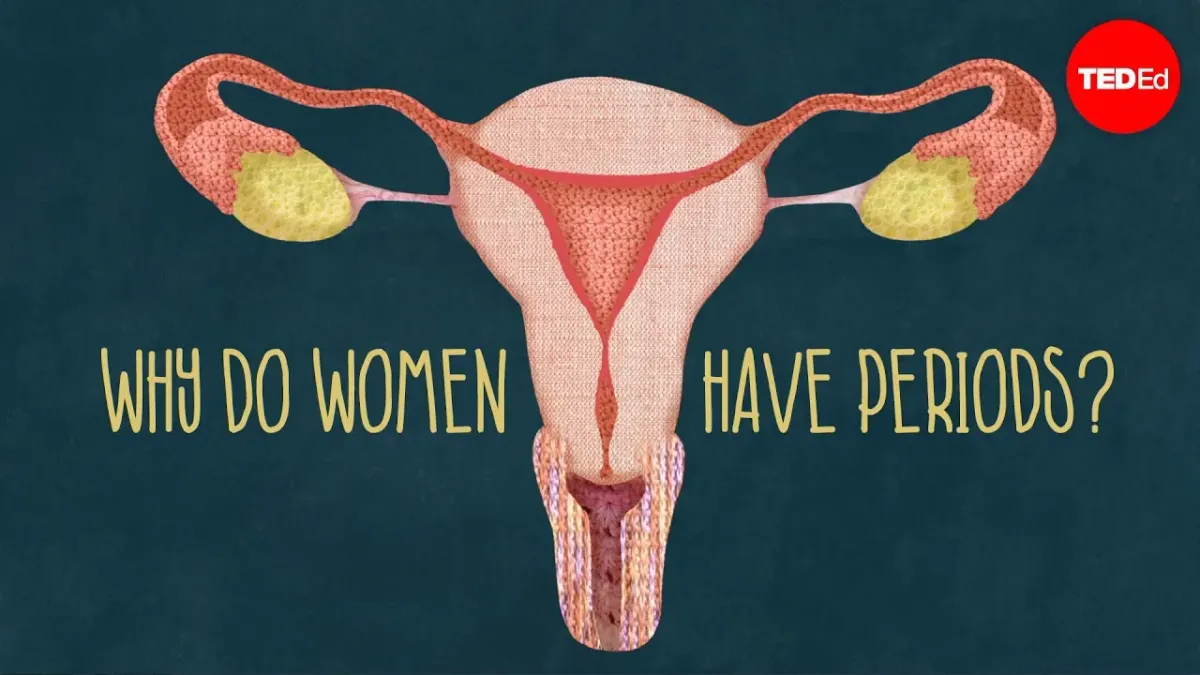
Why do women have periods?
TED-Ed

Why do women have periods?

A handful of species on Earth share a seemingly mysterious trait: a menstrual cycle. We’re one of the select few mammals on Earth that menstruate, and we also do it more than any other animal, even though it’s a waste of nutrients, and can be a physical inconvenience. So where’s the sense in this uncommon biological process? TED-Ed describes the history and evolution of menstruation. Lesson by TED-Ed, animation by TED-Ed.

How do pregnancy tests work? - Tien Nguyen
TED-Ed

How do pregnancy tests work? - Tien Nguyen

Dig into the science of how modern over-the-counter pregnancy tests detect pregnancy with such a high rate of accuracy. -- Over-the-counter pregnancy tests give potentially life-changing results with a pretty high rate of accuracy. But how do they work? Tien Nguyen explains how each test performs a scientifically rigorous, multi-stage experiment that goes from start to finish in the time that it’ll take you to watch this video. Lesson by Tien Nguyen, animation by Andrew Foerster.

How in vitro fertilization (IVF) works - Nassim Assefi and Brian A. Levine
TED-Ed

How in vitro fertilization (IVF) works - Nassim Assefi and Brian A. Levine

Infertility affects 1 in 8 couples worldwide. But in the last 40 years, more than 5 million babies have been born using in vitro fertilization (IVF). How does it work? Nassim Assefi and Brian A. Levine detail the science behind making a baby in a lab. Lesson by Nassim Assefi and Brian A. Levine, animation by Kozmonot Animation Studio.

Why it’s so hard to cure HIV/AIDS - Janet Iwasa
TED-Ed

Why it’s so hard to cure HIV/AIDS - Janet Iwasa

In 2008, something incredible happened: a man was cured of HIV. In over 70 million HIV cases, this was a first, and, so far, a last, and we don’t yet understand exactly how he was cured. But if we can cure people of various diseases, like malaria and hepatitis C, why can’t we cure HIV? Janet Iwasa examines the specific traits of the HIV virus that make it so difficult to cure. Lesson by Janet Iwasa, animation by Javier Saldeña.

Peter Thiel: Going from Zero to One
Chicago Ideas

Peter Thiel: Going from Zero to One

Entrepreneur Peter Thiel believes that history, at least when it comes to businesses, never repeats itself. As a member of the so-called PayPal Mafia, the first outside investor in Facebook and founder of the Thiel Fellowship, Thiel himself has built a career of founding one-of-a-kind enterprises. Hear the "contrarian truths" that led to his biggest successes.

Erin McKean: Go ahead, make up new words!
TED

Erin McKean: Go ahead, make up new words!

In this fun, short talk from TEDYouth, lexicographer Erin McKean encourages — nay, cheerleads — her audience to create new words when the existing ones won’t quite do. She lists out 6 ways to make new words in English, from compounding to “verbing,” in order to make language better at expressing what we mean, and to create more ways for us to understand one another.

How languages evolve - Alex Gendler
TED-Ed

How languages evolve - Alex Gendler

Over the course of human history, thousands of languages have developed from what was once a much smaller number. How did we end up with so many? And how do we keep track of them all? Alex Gendler explains how linguists group languages into language families, demonstrating how these linguistic trees give us crucial insights into the past.

Are Elvish, Klingon, Dothraki and Na'vi real languages? - John McWhorter
TED-Ed

Are Elvish, Klingon, Dothraki and Na'vi real languages? - John McWhorter

What do Game of Thrones' Dothraki, Avatar's Na'vi, Star Trek's Klingon and LOTR's Elvish have in common? They are all fantasy constructed languages, or conlangs. Conlangs have all the delicious complexities of real languages: a high volume of words, grammar rules, and room for messiness and evolution. John McWhorter explains why these invented languages captivate fans long past the rolling credits.

Birth of a nickname - John McWhorter
TED-Ed

Birth of a nickname - John McWhorter

Where do nicknames come from? Why are Ellens called Nellie and Edwards Ned? It's all a big misunderstanding from the early days of the English language, a misunderstanding that even the word nickname itself derives from. John McWhorter tracks the accidental evolution of some familiar diminutives.

A brief history of plural word...s - John McWhorter
TED-Ed

A brief history of plural word...s - John McWhorter

All it takes is a simple S to make most English words plural. But it hasn't always worked that way (and there are, of course, exceptions). John McWhorter looks back to the good old days when English was newly split from German -- and books, names and eggs were beek, namen and eggru!

How did English evolve? - Kate Gardoqui
TED-Ed

How did English evolve? - Kate Gardoqui

What is the difference between "a hearty welcome" and "a cordial reception"? In a brief, action-packed history of the English language, Kate Gardoqui explains why these semantically equal phrases evoke such different images.

Steve Jobs' 2005 Stanford Commencement Address
Stanford

Steve Jobs' 2005 Stanford Commencement Address

Drawing from some of the most pivotal points in his life, Steve Jobs, chief executive officer and co-founder of Apple Computer and of Pixar Animation Studios, urged graduates to pursue their dreams and see the opportunities in life's setbacks -- including death itself -- at the university's 114th Commencement on June 12, 2005.